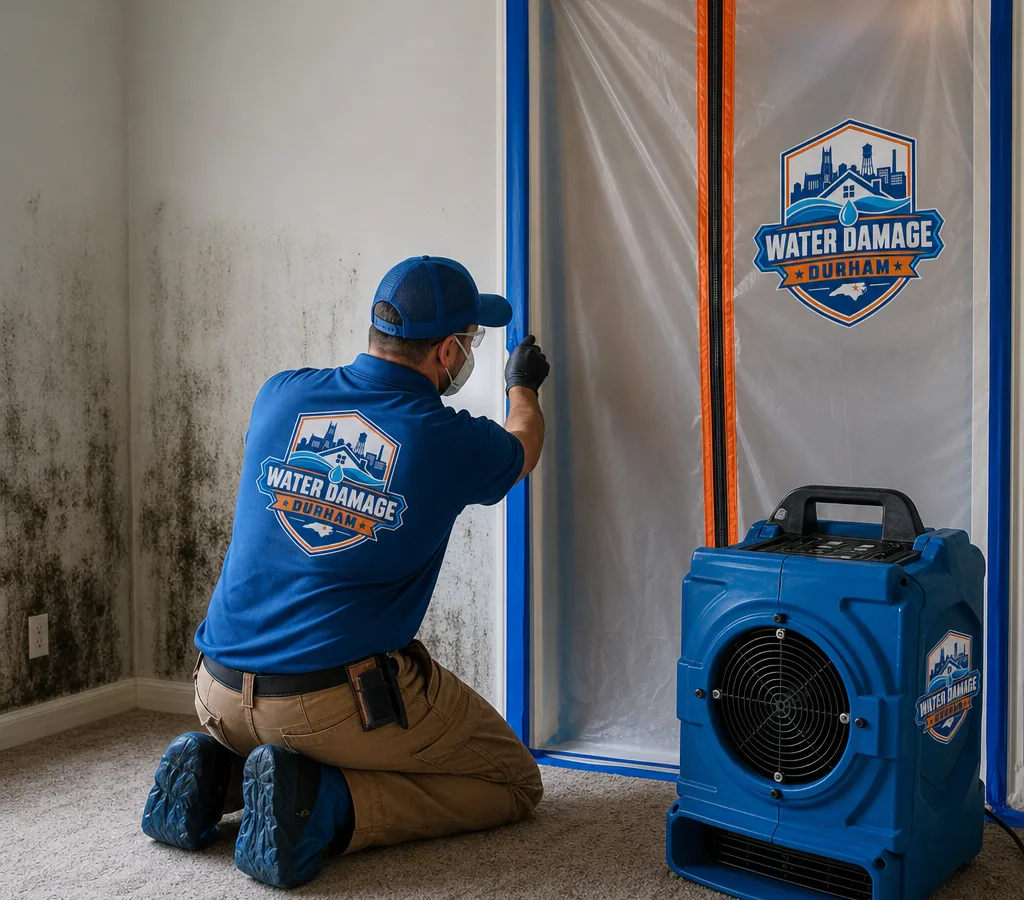
Containment first
We separate the affected area with plastic barriers and controlled access so spores and dust stay where the work is happening.
Serving Durham, North Carolina & surrounding areas
24/7 Emergency Response
Mold Removal · Durham, NC
If you are seeing staining, smelling a musty odor, or dealing with water damage fallout, connect with an independent local contractor for mold inspection, containment, removal, and cleanup.
Source-focused cleanup
When you search for mold removal Durham, you are usually trying to solve two problems at once: the visible growth and the moisture that allowed it to start.
Professional mold removal is built around practical site control. An independent contractor may isolate the affected area, protect the rest of the home, remove contaminated materials when needed, and clean remaining structural surfaces using methods appropriate for mold remediation—not just a quick wipe-down. The underlying moisture issue should also be identified to reduce the chance of recurrence.
Mold can show up after a plumbing leak, roof intrusion, HVAC condensation issues, or long-term high indoor humidity. In Durham, warm, humid seasons can make small moisture problems grow quickly, especially in shaded areas, basements, crawl spaces, and behind cabinets where airflow stays limited.
If you also need help addressing the moisture event that led to growth, ask the independent contractor about coordinating water damage and mold services under one plan.
A controlled scope
A proper remediation is more than cleaning what you can see. Most projects include some or all of the steps below, based on where the mold is and what materials are involved.
We start with a careful evaluation of the affected areas and likely moisture pathways, including bathroom exhaust routes, supply lines, window perimeters, and crawl space vents. We then establish containment to keep disturbed spores from spreading to the rest of the building.
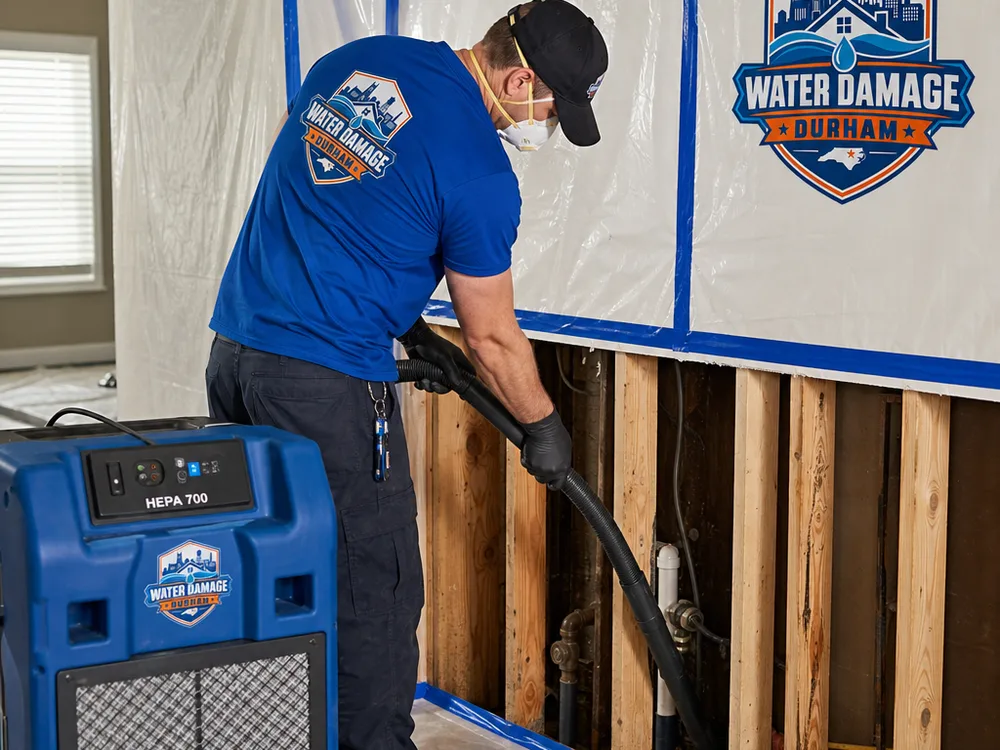
Removal work can involve HEPA vacuuming, controlled demolition of porous materials that cannot be reliably cleaned—such as swollen drywall, insulation, or carpet pad—and detailed cleaning of framing and sheathing. Depending on conditions, we may apply an antimicrobial treatment after cleaning.
Finally, we review what caused the growth and what changes reduce the chance of return. In many Durham homes, that may mean correcting a small leak and improving ventilation or addressing chronic dampness in a crawl space.
Dependable site control
Each decision is based on the affected materials, moisture conditions, and the need to protect clean areas while work is underway.
Request Emergency ServiceWe separate the affected area with plastic barriers and controlled access so spores and dust stay where the work is happening.
HEPA air scrubbers and vacuums capture fine particles during removal and cleaning, which matters most when materials are disturbed.
Some porous materials cannot be safely restored once mold is embedded. We explain what can be cleaned and what should be removed.
We look for the condition that supported growth, such as a hidden leak, condensation, or persistent humidity, and document it so you can fix it.
You get a written plan for what areas are included, what will be removed, and what the next steps are for restoration.
Controlled from start to finish
A sequential process keeps spores controlled, removes unsalvageable materials, and prepares the space for restoration.
We assess visible growth, odor areas, and common hidden locations, then check for active moisture so the plan addresses root cause, not symptoms.
We set barriers and negative air where appropriate, and protect walk paths so the rest of the home stays clean during the work.
If drywall, insulation, carpet pad, or other porous materials are contaminated, we remove them using controlled methods and proper bagging.
We HEPA vacuum and clean remaining structural surfaces. When conditions call for it, we apply antimicrobial treatment after cleaning.
We perform a detailed cleanup of the work area and walk you through what is ready for rebuild and what changes help prevent recurrence.
Planning the scope
Mold removal in Durham typically ranges from about $900 to $6,000+, depending on how many rooms are affected and whether porous materials must be removed. A small, contained area with light surface growth is often at the low end, while multi-room spread, crawl space work, or significant drywall and insulation removal increases cost.
Price is driven by the size of the containment, the type of materials involved—including drywall, insulation, and flooring—access in tight crawl spaces or attic sections, and whether moisture is still active. The exact cost is confirmed after an on-site inspection and a written scope.
If you think mold has spread beyond what you can see, getting a professional scope early can prevent larger demolition and help you plan the restoration timeline.
Request Emergency ServiceBefore you schedule
Many mold issues can be assessed quickly, and the start date depends on the size of the affected area and whether containment and demolition are needed. If the mold followed a recent leak or overflow, schedule an inspection as soon as you notice odor, staining, or damp materials because Durham humidity can accelerate growth in closed-in spaces.
We do both, but only where each method makes sense. Non-porous and semi-porous materials may be cleaned, while porous materials such as drywall, insulation, and carpet pad often need removal when contamination is present. We explain the decision on-site and include it in the written scope.
Mold can return if the moisture condition that supported it remains. Remediation therefore includes identifying the source and what should change. We flag common causes such as slow plumbing leaks, condensation around HVAC components, or persistent crawl space dampness.
It depends on where the work is and who is in the home, but containment and air control are used to reduce cross-contamination during removal. For sensitive occupants or heavy demolition near living areas, we discuss practical ways to limit exposure and keep traffic away from the contained zone.
Yes. Crawl spaces and attics are common locations because airflow can be limited and small moisture problems may go unnoticed. Access and working clearance affect the setup and timeline, and containment and cleanup are planned around how the home is built.
Avoid disturbing the area and do not run fans directly at visible growth because that can move spores into clean rooms. If possible, keep the affected room closed and clear a path for equipment and material removal. We handle containment, protection, and technical cleanup once on site.
Start with an inspection
Share what you are seeing and where it is happening to request a connection with an independent local contractor. The contractor can schedule an inspection and provide a written scope for your review.