Clear containment and dust control
When wet materials must come out, we isolate the work area and manage airflow so demolition debris stays controlled and the rest of the building remains usable when possible.
Serving Durham, North Carolina & surrounding areas
24/7 Emergency Response
Water Damage Restoration · Durham, NC
When water gets in, time matters. Connect with an independent local contractor equipped to stop the spread, dry the structure, and document the work.
Fast, careful water damage restoration for Durham properties
If you are searching for water damage restoration Durham NC, you are probably dealing with a real problem right now: a supply line break, an overflow, an appliance leak, storm water, or water from a neighboring unit. The priorities are the same in every case. Stop the source when possible, remove standing water, dry the materials that can be saved, and make smart decisions about what must be removed to prevent ongoing damage.
Connect with an independent local contractor that can help provide practical recovery work for homes and businesses in Durham. A thorough restoration project looks at how water moved through the structure—including behind baseboards, under flooring, and into wall cavities—uses readings to guide drying equipment, and keeps the work organized.
Water damage is time-sensitive because moisture spreads and materials change quickly. Drywall wicks water upward, insulation holds moisture, and subfloors can stay wet long after surfaces feel dry. The sooner drying and controlled demolition start, the better the odds of saving materials and limiting secondary damage.
Complete property recovery
A complete restoration usually includes several phases, and we adjust the scope to the type of water and how far it traveled.
If the loss involves contamination—for example, sewage or storm runoff—we treat it differently than a clean supply line leak. The work plan will reflect safety, cleaning requirements, and what materials must be removed.
For an overview of available services and the Durham service area, read about Water Damage Durham NC.
Recovery priorities
A useful restoration plan balances safety, measurable drying, material decisions, and the need to return the property to service.
Request Emergency ServiceWhen wet materials must come out, we isolate the work area and manage airflow so demolition debris stays controlled and the rest of the building remains usable when possible.
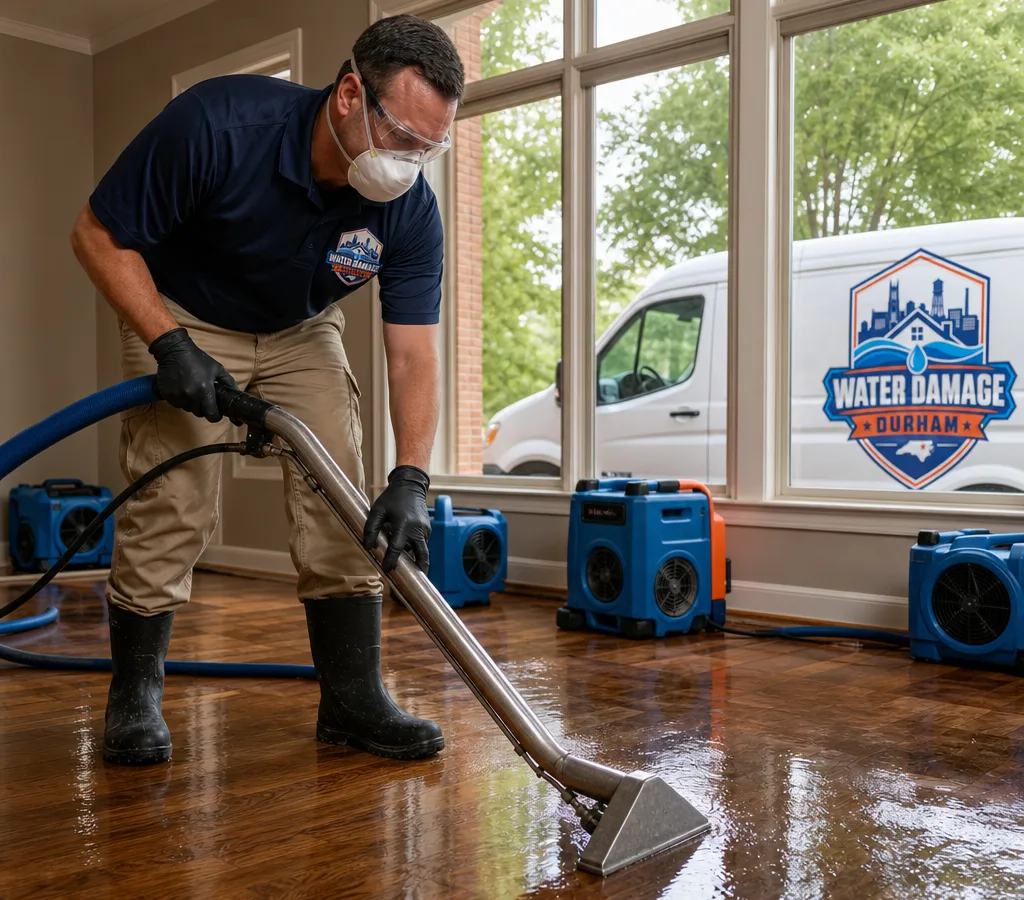
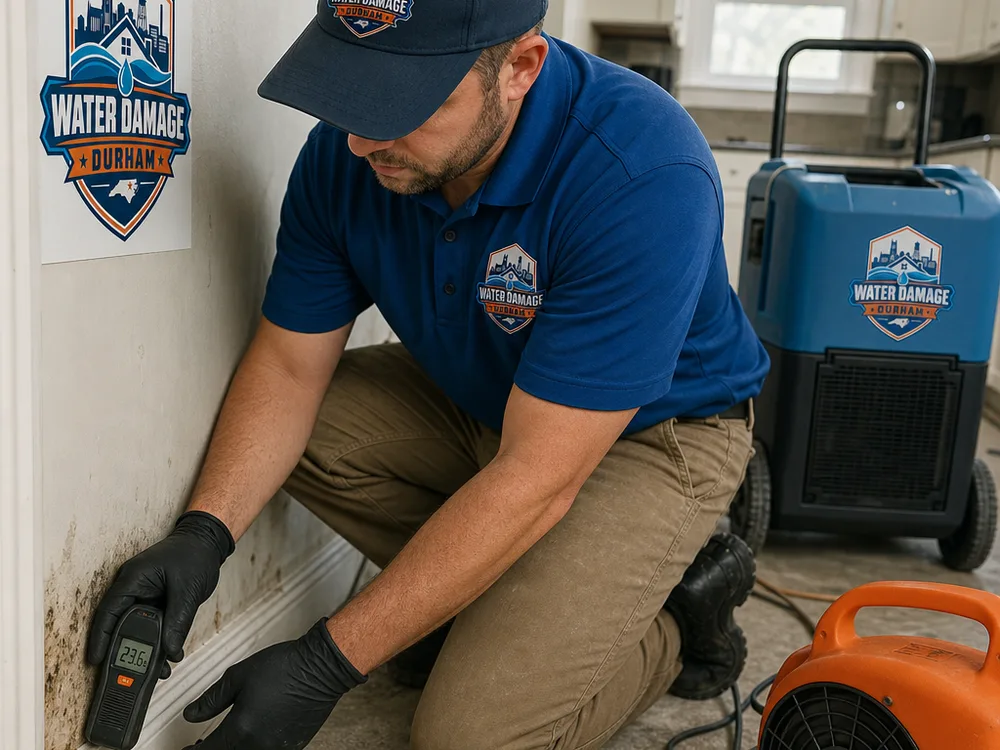
Drying is based on readings, material type, and square footage. Air movers and dehumidifiers are placed to target wet cavities, flooring systems, and framing.
Some materials dry well; others do not. We explain the tradeoffs so you can decide whether to dry in place, remove, or replace based on condition and risk.
We document affected areas, moisture conditions, and the drying process. If you are working with an insurance claim, this helps keep decisions grounded in what happened and what was required.
For businesses and rental properties, downtime is expensive. We plan the work to restore safe access and usable areas as quickly as the drying process allows.
From loss to recovery
The response follows a measured sequence: control the source, remove water, map the damage, dry and monitor, then verify conditions before repairs.
We identify whether the water is clean, gray, or black, trace its likely path, and coordinate source control so the situation does not continue getting worse.
We remove standing water, protect or move contents as needed, and check flooring edges, baseboards, wall cavities, and adjacent rooms to define the affected area.
We make necessary scope decisions, install drying equipment, take follow-up readings, and adjust airflow and dehumidification until materials reach appropriate dry targets.
After final dry verification, we outline the required rebuild work so flooring, drywall, painting, and other repairs can proceed without hidden wet areas remaining.
Planning the scope
Most water damage restoration projects in Durham typically range from about $1,200 to $6,500, with small, contained clean-water leaks on the lower end and multi-room drying with demolition and rebuild planning on the higher end. A minor bathroom or laundry leak may fall around $1,200 to $2,800, while a larger loss affecting flooring and walls can run $3,000 to $6,500+.
Final cost depends on how long the water sat, how far it traveled, the category of water, required demolition, equipment days—including dehumidifiers and air movers—and how much repair work is needed after drying. The exact scope and price are confirmed after an on-site inspection and moisture readings.
Local property conditions
Water damage in Durham often comes down to a few practical realities: older plumbing in established neighborhoods, newer multi-story construction where leaks can affect units below, and heavy rain events that can push water into garages, crawl spaces, and lower levels.
In areas with older homes, water can move into plaster or older framing assemblies that dry differently than modern drywall. In newer builds and townhomes, leaks from bathrooms, laundry rooms, or HVAC condensate lines can show up as staining far from the source. In crawl-space homes, moisture can linger under the house even after the interior looks dry.
If you can do so safely, shut off water to the building and avoid running fans that may spread moisture into other rooms. What helps most is a documented plan: what is wet, what must come out, what can dry in place, and how long the equipment needs to run.
Questions before restoration
Drying should start as soon as the water source is stopped and standing water is extracted, because moisture keeps migrating into drywall, insulation, and subfloors. Even if the surface looks dry, wet cavities can stay saturated and create ongoing damage, so an on-site moisture inspection is the quickest way to set the right drying plan.
Sometimes, especially when water has wicked up drywall or saturated insulation in wall cavities. On clean-water losses with limited spread, drying in place may be possible, but if readings show trapped moisture or swelling and delamination, controlled removal is usually the safer route to reach dry standards.
Some hardwood floors can be saved if the water exposure was brief and drying starts quickly, but outcomes depend on the floor system, the finish, and whether water reached the subfloor. We check moisture levels in the boards and subfloor and explain whether drying in place is realistic or removal is needed to prevent future cupping and buckling.
Yes. We document affected areas and the drying process so the claim has clear support for what happened and what work was required. Coverage depends on your policy and the cause of loss, so we focus on accurate scope, photos, and moisture readings that help move decisions forward.
If it is safe, stop the water source, shut off electricity to wet areas if there is any risk, and move small valuables out of the affected room. Avoid pulling up flooring or opening walls unless you know what is behind them; a structured moisture inspection prevents unnecessary damage and helps target demolition only where needed.
Drying commonly takes several days, but the timeline depends on materials, how far water traveled, and humidity conditions. The restoration timeline also includes any required demolition and the repair phase after drying, so we provide a clear sequence: extraction, drying, verification, then the rebuild plan.
Start the recovery plan
Share what happened and which areas are affected to request a connection with an independent local contractor. The contractor can schedule an inspection and provide a scope for cleanup, drying, and repair planning.